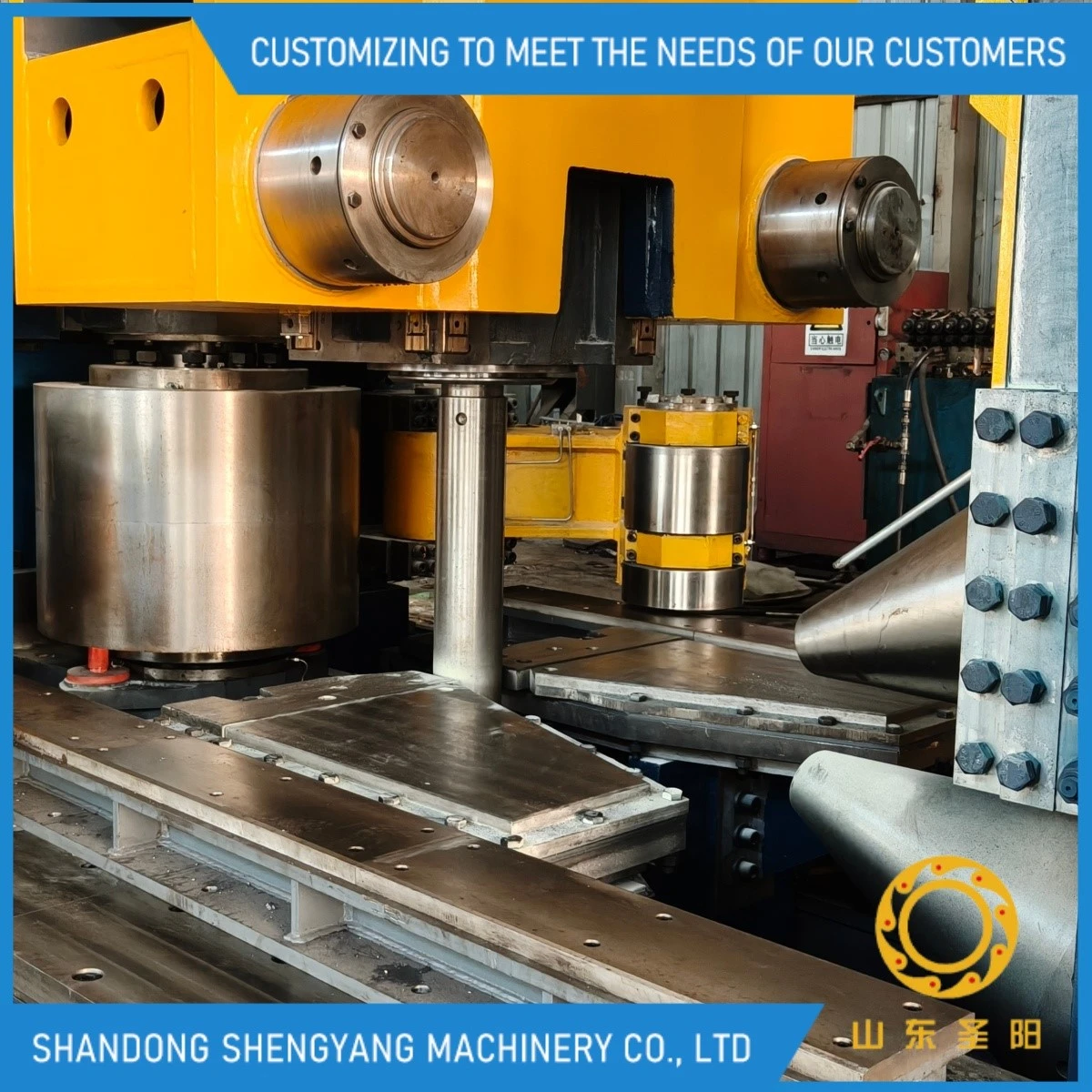
1. Complete Production Process for 6061 Aluminum Alloy Rings
The core function of an aluminum alloy ring-rolling production line is the forming of workpieces. The entire production process-from raw material preparation to the final rolling of the finished product-consists of standardized and sequential operations. The specific production steps are as follows:
1. Sawing and Cutting: The production line begins with a sawing process, where solid 6061 aluminum alloy bars are precisely cut into segments of specific lengths according to production requirements, establishing the necessary dimensions for subsequent processing.
2. Constant-Temperature Heating: The cut aluminum segments are automatically fed into a heating furnace. Through precise temperature control, the aluminum is heated to the standard temperature required for forging or rolling processes, which alters the material's hardness and toughness to meet the conditions necessary for plastic deformation (forming).
3. Upsetting and Punching via Hydraulic Press: Once heated, the aluminum billets are automatically discharged from the heating furnace and mechanically transported to a hydraulic press. Here, they undergo the core processes of upsetting and punching, transforming the solid billets into hollow preforms and establishing the initial shape of the ring components.
4. Ring Rolling: The hollow preforms-pre-processed by the hydraulic press-are fed into a ring rolling machine for precision rolling. By carefully controlling the pressure and rotational speed, the machine shapes the preforms into ring-shaped forgings that meet specific standards and precise dimensional requirements. This process is used to manufacture various ring-shaped components, such as circular flanges and bearing rings.
2. Standard Process Requirements for 6061 Aluminum Alloy Rings
According to general industry production standards, 6061 aluminum alloy rings are required to undergo T6 heat treatment after forming.
This process is the core step for enhancing the quality of 6061 aluminum products; it significantly improves key performance characteristics-such as hardness, tensile strength, and structural stability-thereby substantially optimizing the overall quality of the finished parts. It is the standard, default process used throughout the industry for the mass production of 6061 aluminum rings.
3. Key Factors Influencing the Quality of Finished Aluminum Ring Components
Many clients hold a common misconception, assuming that the forming equipment in a ring-rolling production line-such as machinery for cutting, heating, and rolling-determines the final quality of aluminum ring components. In reality, this is not the case. The entire ring-rolling production line serves only to shape the material and establish its dimensions; while it alters the product's physical form and structure, it has no impact on the intrinsic material properties or the ultimate quality of the finished component.
There are only two core factors that truly determine the final quality of 6061 aluminum alloy ring components:
1. Quality of the Raw Aluminum Billet
Even when using the same 6061-grade aluminum alloy, raw materials from different manufacturers or different production batches can vary in terms of purity, impurity content, and internal microstructure. This inconsistency in the quality of the raw material directly dictates the fundamental performance of the finished ring components and serves as the primary factor influencing product quality.
2. T6 Heat Treatment Process and Parameters
Heat treatment is a critical stage that determines the performance of finished 6061 aluminum ring components. Factors such as the temperature control precision of the heat-treatment furnace, the duration of the soaking (holding) period, the cooling method, and the specific configuration of process parameters directly dictate key performance indicators-including hardness and tensile strength. Even minor deviations in these process parameters can lead to significant differences in the quality of the final product.
4. Summary of Core Functions of the Production Line
The entire production line for aluminum alloy ring forgings is, in essence, a specialized system for ring forming. From initial cutting (sawing) and pre-heating, through shaping via a hydraulic press, to rolling on a ring-rolling machine, the equipment serves solely to transform solid aluminum bars into standardized ring-shaped forgings, focusing exclusively on dimensional accuracy and geometric specifications. The forming equipment and rolling processes have no impact on the core quality parameters of the aluminum material-such as its intrinsic properties or mechanical performance-as the quality of the final product is determined solely by the quality of the raw material and the subsequent heat treatment process.