

Hey there! As a supplier of Ring Roller Forged Ring, I've spent a good deal of time diving into the world of ring rolling and figuring out how to boost the formability of these rings. In this blog, I'm gonna share some of the tricks and tips I've picked up along the way.
Understanding the Basics of Ring Roller Forged Rings
Before we jump into how to improve formability, let's quickly go over what ring roller forged rings are. These rings are made through a process called ring rolling, where a pre - formed doughnut - shaped piece of metal is placed between a driven roll and an idler roll. As the rolls rotate, the ring is gradually expanded and thinned, resulting in a seamless ring with excellent mechanical properties. They're used in a wide range of industries, from aerospace to automotive, because of their high strength and reliability.
Material Selection
One of the first steps in improving the formability of ring roller forged rings is choosing the right material. Different metals have different formability characteristics. For example, aluminum alloys are generally more formable than some high - strength steels. When selecting a material, consider factors like its ductility, yield strength, and work - hardening rate.
Ductility is crucial because it determines how much the material can be deformed before it fractures. A material with high ductility can be stretched and shaped more easily during the ring rolling process. Yield strength, on the other hand, is the stress at which the material begins to deform plastically. If the yield strength is too high, it might require more force to shape the ring, and there's a higher risk of cracking.
Work - hardening rate also plays a role. Some materials harden quickly as they're deformed. This can make it difficult to continue the forming process without causing damage to the ring. So, look for materials with a relatively low work - hardening rate if you want better formability.
Pre - processing Treatments
Pre - processing treatments can significantly enhance the formability of the material before it goes into the ring rolling process. One common treatment is annealing. Annealing involves heating the material to a specific temperature and then cooling it slowly. This process relieves internal stresses in the material, refines the grain structure, and improves its ductility.
Another useful pre - treatment is surface cleaning. Any contaminants on the surface of the material can cause problems during the rolling process. For example, dirt or oxide layers can reduce the friction between the rolls and the material, leading to uneven deformation. So, make sure to clean the surface thoroughly before starting the ring rolling.
Optimizing the Ring Rolling Process
The ring rolling process itself can be optimized to improve formability. First, pay attention to the rolling speed. If the speed is too high, the material might not have enough time to deform properly, and there's a risk of cracking. On the other hand, if the speed is too low, it can be time - consuming and might lead to inconsistent deformation.
The amount of reduction per pass is also important. A large reduction per pass can put too much stress on the material, increasing the likelihood of cracking. It's better to make smaller, incremental reductions over multiple passes. This allows the material to deform gradually and evenly.
Roll design is another factor. The shape and surface finish of the rolls can affect how the material is deformed. For example, rolls with a smooth surface can reduce friction and prevent the material from sticking. Also, the profile of the rolls can be designed to control the flow of the material during the rolling process.
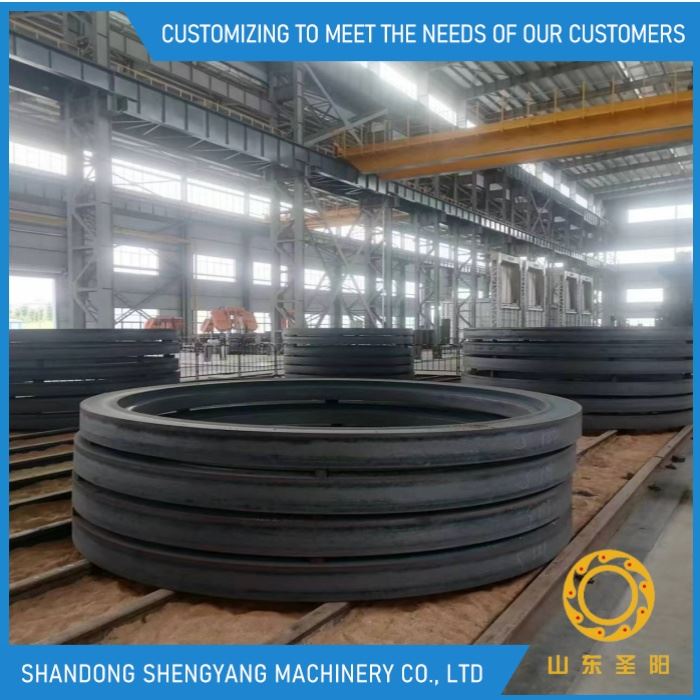

Using Ring Rolling Machine Accessories Processing
Specialized ring rolling machine accessories can also contribute to better formability. For instance, some accessories can help in controlling the temperature of the material during the rolling process. Maintaining the right temperature is crucial because the formability of most materials is temperature - dependent.
There are also accessories that can assist in guiding the material and ensuring a more uniform deformation. These accessories can help prevent issues like uneven wall thickness or ovality in the final ring.
Post - processing Treatments
After the ring rolling process, post - processing treatments can further improve the quality and formability of the ring. Heat treatment is a common post - process. It can be used to adjust the mechanical properties of the ring, such as increasing its hardness or toughness.
Shot peening is another post - treatment that can be beneficial. It involves bombarding the surface of the ring with small shots, which creates compressive stresses on the surface. These compressive stresses can improve the fatigue resistance of the ring and also help in relieving any residual tensile stresses that might have been introduced during the rolling process.
Quality Control
Throughout the entire process, quality control is essential. Regular inspections can help identify any issues early on, such as cracks or uneven deformation. Non - destructive testing methods, like ultrasonic testing or magnetic particle testing, can be used to detect internal defects in the ring.
By closely monitoring the quality of the rings at each stage, you can make adjustments to the process as needed to ensure better formability and overall quality.
Seamless Rolled Ring Forging and Formability
Seamless rolled ring forging offers several advantages when it comes to formability. Since there are no seams in the ring, there are no weak points that could lead to cracking during the forming process. The seamless structure also allows for a more uniform distribution of stresses, which is beneficial for achieving better formability.
Conclusion
Improving the formability of ring roller forged rings is a multi - step process that involves careful material selection, proper pre - and post - processing treatments, optimization of the ring rolling process, and strict quality control. By following these steps, you can produce high - quality rings that meet the demanding requirements of various industries.
If you're in the market for high - quality Ring Roller Forged Ring, I'd love to have a chat with you. Whether you have specific requirements or just want to learn more about our products, don't hesitate to reach out for a procurement discussion.
References
- Smith, J. (2018). Metal Forming Processes. Publisher: Metal Tech Press.
- Johnson, A. (2020). Ring Rolling Technology. Publisher: Forging Innovations Inc.
- Brown, C. (2019). Materials for High - Performance Forgings. Publisher: Material Science Publishers.