




Why Choose Us?
Quality products
We have advanced production and testing equipment, and our products meet various standards.
Rich experience
The company has been established for 10 years, we have been widely recognized and highly praised by enterprises and consumers for our excellent quality and thoughtful service.
Reliable service
Our team is committed to providing reliable and consistent service, ensuring that you receive high-quality products and customer support from us every time.
Professional team:
The company is in possession of numbers of senior engineers and has abundant technique power, well conditioned equipment and technology comes to perfection.
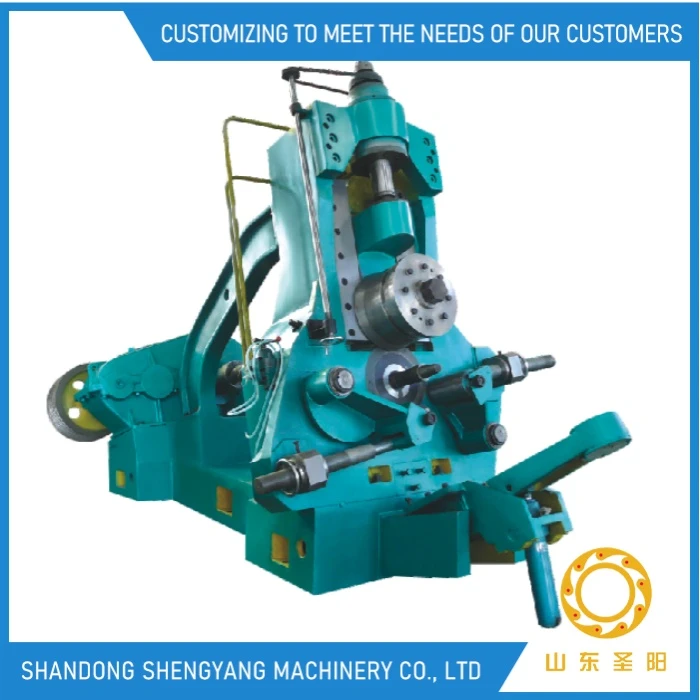
A vertical ring rolling mill is a specialized machine used for the production of seamless rings. It is predominantly used in the manufacturing of high-quality ring-shaped components, such as bearing races, gears, and flanges. This unique mill employs vertical motion to achieve the desired ring shape and is capable of producing rings with a wide range of dimensions and materials.
The vertical ring rolling mill operates by feeding the material, typically a metal billet, into a pair of rolls. These rolls rotate in opposite directions, applying pressure to the billet as it passes through them. The rolls have specific profiles that determine the final ring geometry. As the billet undergoes these forces, it is compressed and shaped into a cylindrical form.


High precision
The vertical ring rolling mill ensures high precision in the final product with accurate grain orientation and reduced dimensional variations.
Improved material quality
The vertical ring rolling mill facilitates the production of high-quality materials by eliminating internal voids and improving microstructure.
Energy efficiency
Compared to traditional forging methods, the vertical ring rolling mill requires less energy to produce high-quality rings.
Increased production rate
The vertical ring rolling mill can produce rings of various sizes and shapes, and it is capable of producing large quantities of rings in a short amount of time.
Reduced waste
The vertical ring rolling mill generates minimal waste and reduces the need for subsequent machining operations.
Reduced labor cost
The vertical ring rolling mill reduces the need for skilled labor, as it automates the ring production process.
Easy maintenance
The vertical ring rolling mill requires minimal maintenance and has a long service life due to its robust construction.
Ring rolling is a particular category of metal rolling, in which a ring of smaller diameter is rolled into a precise ring of larger diameter and a reduced cross section. This is accomplished by the use of two rollers, one driven and one idle, acting on either side of the ring's cross section. Edging rollers are typically used during industrial metal rolling manufacture, to ensure that the part will maintain a constant width throughout the forming operation. The work will essentially retain the same volume, therefore the geometric reduction in thickness will be compensated for entirely by an increase in the ring's diameter. Rings manufactured by ring rolling are seamless. This forming process can be used to manufacture not only flat rings, but rings of differently shaped cross sections as well, producing very precise parts with little waste of material.
The commissioning and use of the vertical ring rolling mill has facilitated our production and life, and also promoted the development of industry. However, the ring rolling machine is also the same as people, if you don't pay attention to maintenance, you will be "sick" if you don't check it regularly. Problems of one kind or another will occur, and in severe cases, the entire machine may be paralyzed. Therefore, we must master the knowledge of maintaining the ring rolling machine to ensure the normal operation of the ring rolling machine and prolong the service life of the ring rolling machine.
We all know that the vertical ring rolling mill equipment is a kind of rotary forming machinery in the forging equipment, which mainly adopts motor drive and mechanical transmission. In the working process of the ring rolling machine, the working part of the equipment and the processed parts are both at the same time or with one of them to do rotational motion. Therefore, when we use the ring rolling machine, we should add oil to each lubricating oil point according to the regulations before starting the machine, and usually check whether the screws of each part are loose, and also check whether there is oil leakage in some parts of the hydraulic pressure, and often clean the oil return oil filter, if there is loose screws and oil leakage, we must deal with it in time.
Secondly, when using the vertical ring rolling mill, it is necessary to pay attention to whether the oil level of the hydraulic tank is normal. And to remove impurities in time, check whether the pressure of the oil pump meets the specified requirements. Adjust the rolling force appropriately according to the temperature, size and material of the blank to ensure the quality and productivity of the forging. Check whether the lubricating oil circuit is unblocked, lubricate the working column, slider, coupling, and lubricate, and run the empty car first, and wait for the normal operation of each part before starting production. It is also necessary to check whether the switches of electrical appliances, various solenoid valves and operating mechanisms are normal. Adjust the mold with the gap and tighten it from time to time, preheat the mold before use, carefully check whether the model, material, specification and mold of the product are consistent, and the production can only be carried out after accuracy.
When using the vertical ring rolling mill, it is necessary to pay attention to the full cooling of the cooling part, and the ring rolling machine shall not be forced to cold roll when the temperature is in the range of 1000 °-1200 °, which will lead to damage to the machine. Moreover, the motor bearing should be inspected and lubricated once a year, and the slider bearing and mandrel bearing should be inspected every six months. And to clean and replace the lubricating oil, the pressure roller should be cleaned every month, and the electric control box should be checked once a month to check whether the components are damaged and whether there is looseness, and replace them in time when abnormal conditions are found.
Lubrication And Maintenance Of Vertical Ring Rolling Mill
● The roller bearing of the swing roller is oiled, and high temperature resistant butter is used for 2 times per shift.
● Manual lubrication pump oil of pendulum rolling machine, 2 times per shift, mix with high-temperature butter and engine oil 4:1 and stir into a paste before adding the oil pump, then loosen the air screw, and the handle is repeatedly pressurized until the oil is out of the pores.
● Refueling the hydraulic power station, keeping the oil window clean and the oil scale obvious. Check the oil window every shift to keep the oil level within the required scale. When starting the machine, check whether the pressure of the hydraulic system pressure gauge is within the normal use range. If the oil level cannot be identified from the oil window, the straightened wire can be temporarily used to reach into the fuel tank to detect the depth of the oil level.
● The clamping mandrel is made of high-temperature resistant butter, once per shift.
● Refuel the large bearing, carry out regular maintenance of the equipment every six months, and fill the large bearing with high-temperature butter.
● Check the loosening of the swinging screws in each shift, and tighten them immediately when they are loose.
● Clean the oxide scale in the machine tool twice per shift.
The Vertical Ring Rolling Mill Drives The Development Of Ring Forgings
The vertical ring rolling mill is a machine used to produce ring forgings. It is a specialized tool used primarily by industrial manufacturers to produce high-quality forged rings for a variety of applications. The process of vertical ring rolling involves heating a piece of metal to its plastic deformation temperature, then using a set of rollers to shape the metal into a ring.
The advantages of using a vertical ring rolling mill to produce ring forgings include:
High quality
The vertical ring rolling process produces forged rings of high quality, with excellent surface finish, dimensional accuracy, and mechanical properties.
Large sizes
The vertical ring rolling mill can produce rings of large sizes that are difficult to produce using other forging processes.
Material savings
The process is very efficient, and it generates little waste, allowing manufacturers to save on materials.
Automation
The use of automation in the vertical ring rolling process allows for consistent quality and improved cycle times.
According to the process mode, the vertical ring rolling mill is divided into: Closed and open vertical ring rolling mill. The blank that is heated and punched with a small hole is sleeved on the core roller, the inner edge of the rolling roller drives the blank to rotate, realizes the thinning of the blank thickness and the expansion of the diameter, the restriction of this process mode structure, etc., has been less adopted, the blank that is heated and punched with a small hole is sleeved on the core roller, and the outer edge of the rolling roller drives the blank to rotate, and the thinning of the blank thickness and the rolling forming of the diameter expansion are realized. This process method is more reasonable and applicable to both feeding and discharging, as well as the diameter of the rolling ring and the structure of the machine, so it is widely used.
The forging process of the vertical ring rolling mill forging ring gear and gear blank mainly has the following processes: Pier roughing, drawing, punching, reaming, the difference between free forging and ring rolling process is mainly in the process of reaming. Free generally using the horse bar reaming, the rolling ring is mainly used rolling reaming, the free forging rolling ring is mainly using the horse bar rolling ring, the stress and strain situation of the horse bar rolling ring is approximately elongated, and the long axis is elongated, it is the annular blank along the circumferential direction of the elongation, is the local loading, the overall force, the deformation area of the horse bar reaming metal flows along the tangential and width directions, the metal in the deformation area of the horse bar rolling ring mainly flows along the tangential direction, and expands the inner and outer diameter. The forging of the rolling ring on the horse bar is generally thin, so the resistance of the tangential flow of the metal in the outer deformation area is far less than the width direction, and the contact surface between the horse bar and the forging is arc-shaped, which is conducive to the flow of metal along the tangential direction, so the size change of the forging when the horse bar is rolled is the wall thickness is thinned, the inner and outer diameters are expanded, and the width (height) direction is slightly increased. Therefore, the reaming on the horse bar can be forged into thin-walled forgings.
Process Characteristics Of The Vertical Ring Rolling Mill
Vertical ring rolling mill is a machine that is used to roll cylindrical rings and other complex shapes with great accuracy and precision. This machine has a unique design that enables the production of a variety of ring shapes with different diameters and wall thicknesses. Here are some of the major process characteristics of a vertical ring rolling mill:


Vertical axis: Unlike conventional rolling mills that have a horizontal axis, the vertical ring rolling mill has a vertical axis. This means that the ring or the workpiece moves upward or downward during the rolling process.
Axial feed: The axial feed is the primary source of power for the rolling process. This is achieved by a hydraulic cylinder that pushes the roller towards the workpiece. The axial feed controls the thickness of the ring and determines the final shape of the workpiece.
Radial feed: The radial feed is a secondary source of power that is used to control the diameter of the ring. This is achieved by adjusting the position of the roller in relation to the workpiece.
Continuous rolling: The vertical ring rolling mill enables continuous rolling of the workpiece. The workpiece is fed into the machine and is rolled without stopping until the desired shape and size are achieved.
Precise control: The vertical ring rolling mill provides precise control over the shape and size of the workpiece. This is achieved through the use of computer-controlled systems that monitor and adjust the rolling parameters in real-time.
High efficiency: The vertical ring rolling mill has a high production efficiency due to its continuous rolling process. This results in reduced production time, increased output, and lower production costs.
Strong and durable: The vertical ring rolling mill is designed to withstand the high forces and stresses that are generated during the rolling process. This makes it a highly durable and reliable machine that can operate for long periods of time without breakdowns or maintenance issues.
The vertical ring rolling mill consists of the following components:
Rollers: These are the primary components of the mill, and they are responsible for applying pressure on the workpiece to create the desired shape. The rollers are mounted on a shaft and rotate in opposite directions to the workpiece.
Workpiece: This is the metal or alloy that is being rolled into the desired shape. It is placed between the rollers and subjected to pressure, heat, and rotation to achieve the desired final shape.
Hydraulic system: This system provides the necessary pressure to the rollers to apply force on the workpiece. The hydraulic system is controlled by a computer program that ensures precise pressure and temperature settings for each rolling pass.
Heating system: The heating system is used to heat the workpiece to the required temperature for rolling. The heating can be accomplished through various methods such as induction heating, gas heating, or electric heating.
Cooling system: The cooling system is used to cool the workpiece after rolling to prevent warping and cracking. It can be accomplished through various methods such as water quenching, air cooling, or oil quenching.
Control system: The control system is a computerized system that controls the overall operation of the mill. It monitors and adjusts the temperature, pressure, and speed of the rollers, as well as the timing of the rolling passes to achieve the desired final shape of the workpiece.
Support system: The support system includes various components such as the foundation, bearings, and couplings that are necessary to support the mill and ensure stable operation.
How to Maintain the Vertical Ring Rolling Mill?
Regular inspection and maintenance of the bearings
The vertical ring rolling mill has a large number of bearings, and it is essential to regularly inspect and replace the bearings that show signs of wear and tear. This will help to prevent any unexpected equipment failures.
Lubrication
It is crucial to ensure that all the parts of the vertical ring rolling mill are adequately lubricated. This will help to keep the equipment running smoothly and reduce wear and tear.
Cleanliness
The vertical ring rolling mill should be kept clean and free from debris, dust, and other contaminants to ensure optimum performance.
Check alignment
It is essential to check the alignment of the various components of the vertical ring rolling mill regularly. Misalignment can lead to excessive wear and tear, resulting in equipment failure.
Training and support
Operators of the vertical ring rolling mill should receive appropriate training and support to ensure they are operating the equipment correctly. This will help to prevent accidental damage and ensure the mill operates smoothly and safely.
Replace worn parts
Worn parts, such as rolls, gears, and bearings, should be replaced promptly to prevent further damage to the vertical ring rolling mill. Replacing worn parts will also ensure the equipment continues to operate efficiently.
Advantages of Rolled Ring Forging - Vertical Ring Rolling Mill
Rolled ring forging is a process that begins with a circular preform of metal that has already been pierced to make a hollow "doughnut" shape. This ring is heated, then rotate to reduce its wall thickness and increasing the diameters of the resulting ring.
Among the advantages of using these rings:
Strength – Forgings are stronger than other components, maintaining their strength through high temperature fluctuations.
Cost effectiveness – These rings are manufactured at a lower cost than similar products. There's less machining involved because the rings closely match the contour of the finished shape.
Reliability – The high temperatures needed to created rolled rings means the grain pattern used in making them gives them metal more strength and resistance compared to other components.
Better under heat – Compared to other components, it's easier to predict how rolled rings will react to heat. With most other components, users need to take care when applying heat to prevent the component from melting or otherwise deforming. With forgings, users can be sure of the maximum heat it can withstand.
Wider range of materials – These rings can be made from any forgeable material – alloy, stainless steel, carbon, aerospace metals. This versatility makes them a flexible and responsive answer when manufactures seek components in markets such as power generation, chemical and refinery industries.
Our Factory
Shandong Shengyang Machinery Co., Ltd. is a high-tech enterprise specializing in the research, development and production of ring rolling machines/hole expansion machines. After more than ten years of development and innovation, the domestically leading D53KS series CNC radial and axial ring rolling machines have been developed. This machine has reached the international advanced level and can replace imported similar products. Products are exported to Europe, Asia and other international and domestic markets. Over the years, the company has cultivated a number of excellent R&D teams in high-end ring rolling machines, forging equipment and processes, and established a complete market management and marketing service network. The company's product design uses CAD, SOLIDWORKS, DEFORM and other software to analyze and optimize the equipment structure, simulate the process of forging products, and provide users with ideal equipment and production processes.

FAQ
Q: What is ring rolling in manufacturing process?
Q: Why are edging rolls used in ring rolling?
Q: Is ring rolling a type of forging process?
Q: What types of products are produced by ring rolling?
Q: Do we need sizing process on vertical ring rolling mill?
Q: What is flat rolling?
Q: What is the difference between flat rolling and shape rolling?
Q: Which is better rolling or forging?
Q: How is cold forging done?
Q: How do you know if something is rolling without slipping?
Q: What is bite angle in rolling mill?
Q: How do you clean rolling mill rollers?
Q: How do you oil a rolling mill?
Q: What can I use to clean my rolling mills?
Q: What is a vertical ring rolling mill?
Q: How does a vertical ring rolling mill work?
Q: What types of alloys can be rolled using a vertical ring rolling mill?
Q: What are some common applications for rings produced using a vertical ring rolling mill?
Q: What are some other key features of a vertical ring rolling mill?
Q: What are the advantages of a vertical ring rolling mill?
Hot Tags: vertical ring rolling mill, China vertical ring rolling mill manufacturers, suppliers, factory, precision ring rolling machine, motors for ring rolling machine, Flange Making Vertical Type Auto Ring Rolling Machine, use of ring rolling machine, inspection tools for ring rolling machine, upkeep of ring rolling machine